
Responsible gambling tools are most useful when they are chosen before a session becomes difficult to manage. For adults considering online jackpot games Canada, the important question is not only which games are available, but how easily spending, time and access can be controlled. Information about the lussurio casino bonus should therefore be read alongside the applicable promotional terms and account-control options, rather than treated as a reason to increase deposits or chase a result.
Begin with a limit that reflects your real budget
A gambling budget should come from discretionary money: funds left after housing, food, debt payments, savings and other obligations. It should not depend on an expected win, a future paycheque or money needed for an emergency. Setting a weekly or monthly ceiling before opening a gaming account creates a clear stopping point, even when a jackpot game is especially engaging.
Separate the spending limit from the length of a session. A person may decide on a modest financial amount but continue playing for hours, or stop spending while still being distracted from work, sleep or family responsibilities. A time limit addresses that second risk. Decide how long a session may last, when breaks will happen and what activity will follow the final play.
Account controls listed for the platform include deposit limits, wagering limits and loss limits. These tools measure different things, so readers should check the wording before choosing one. A deposit cap restricts money added, while a loss cap relates to the result over a defined period. If the interface does not clearly explain the period, reset date or calculation method, ask support before relying on it.
How do deposit and loss controls differ?
A deposit limit controls the amount placed into an account during a selected period. It can be useful for preventing impulsive top-ups, but it does not necessarily show how quickly funds may be used. A wagering limit focuses on the amount staked, which may be relevant when many small bets create a larger total than expected.
A loss limit is intended to restrict the amount lost over a stated timeframe. However, readers should confirm how wins, withdrawals, reversed transactions and pending bets are treated. Terms can vary by operator and product. Never assume that changing a limit will apply instantly; look for an effective date or confirmation message and keep a record of the setting.
These controls are strongest when used together with an independent spending method. For example, a person might set a low deposit ceiling, use a separate entertainment budget and avoid keeping saved payment details. If a limit feels difficult to set or repeatedly needs to be raised, that pattern is more important than the original number and may justify taking a break.
Use reality checks to interrupt automatic play
Reality checks are reminders designed to bring attention back to elapsed time or account activity. They matter because online play removes many natural stopping cues: there is no closing time, physical journey home or visible pile of spent cash. A reminder can prompt a deliberate decision to stop, pause or review the session.
When a reality check appears, treat it as a decision point rather than dismissing it automatically. Stand up, leave the screen and review how long you have played and how much has been spent. If the figures are unclear, check the account history or transaction record. Continuing should be a conscious choice, not simply the result of closing a notification.
Short breaks also help distinguish entertainment from emotional play. During a pause, ask whether boredom, stress, frustration or the desire to recover losses is driving the next bet. The Responsible Gambling Council’s public information offers broader educational guidance, but it does not replace the specific terms or controls supplied by an individual operator.
Choose cooling-off or self-exclusion when limits are not enough
A cooling-off period is suited to someone who wants temporary distance without making a longer-term decision. The available information lists temporary cooling-off periods among the account controls. Before activating one, check its duration, whether it can be shortened, and whether promotional messages or account access stop immediately.
Self-exclusion is a stronger step intended to restrict access for a selected period or under stated conditions. It should not be treated as a routine pause that can be reversed whenever an urge returns. Read the instructions carefully, including whether duplicate accounts, alternative contact details or other access routes are addressed by the terms.
If gambling is affecting bills, relationships, sleep, work or mood, do not rely only on a platform setting. Speak with a trusted person and seek professional or community support. A person can also ask customer assistance to explain the available restriction process, but support staff cannot determine what level of gambling is safe for an individual.
Review bonus conditions before they influence your limits
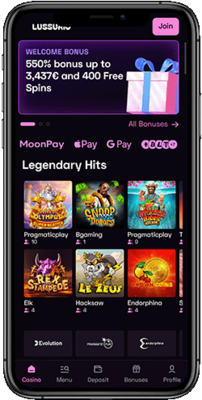
Promotions can make a planned budget harder to follow because the headline value may draw attention away from the amount required to qualify. Published descriptions refer to matched bonuses, free spins, reload offers, cashback and other campaigns, but the exact cap, deposit floor, eligible game and expiry period depend on the specific offer. Treat any bonus as optional entertainment, not extra income.
Wagering conditions may apply to the deposit and bonus together, and some categories may contribute less or be excluded. Bonus balances can also be affected when a withdrawal is requested. Before accepting an offer, identify the qualifying deposit, wagering calculation, expiry, maximum conversion or withdrawal rules and the effect of cancelling. If a condition is unclear, ask for written clarification before depositing.
A responsible decision may be to decline a promotion altogether. This can simplify budgeting and remove pressure to play more frequently or for longer. Never increase a limit merely to complete wagering, and never deposit again because previous play produced a loss. If the promotion conflicts with a preset spending or time plan, the plan should take priority.
Questions about safer play controls
Can a jackpot game be part of a responsible gambling plan?
It can be treated as paid entertainment if the player uses a fixed budget, accepts that the entire amount may be lost and stops at the planned time. Jackpot potential does not change the odds or guarantee a return. Do not use rent, credit, borrowed funds or essential household money.
What should I do if I keep raising my limits?
Stop playing rather than continuing to adjust the settings. Use a cooling-off or self-exclusion option if available, remove easy payment access and tell someone you trust. If gambling is causing financial, emotional or relationship problems, contact a qualified support service instead of trying to solve the pattern through stricter self-management alone.
Do responsible gambling tools guarantee that spending will stop?
No. They are practical barriers and reminders, not a guarantee. Their operation depends on the stated terms, effective times and account information. Review confirmations carefully, avoid duplicate accounts and seek help if controls are being bypassed or feel impossible to maintain.