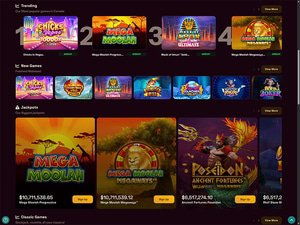
Responsible gambling tools are most useful when they are chosen before play becomes difficult to manage. The Canadian-facing information for grizzlys quest casino describes several account controls, including deposit limits, session reminders, self-assessment information and self-exclusion. These tools do not remove the risk of losing money, but they can add pauses, spending boundaries and support when used deliberately. Players should also confirm that the service is available in their province, read the current terms and treat gambling as paid entertainment rather than a source of income.
Choose a limit before making a deposit
A deposit limit is usually the most direct first step because it places a ceiling on how much money can be added during a selected period. The available information refers to daily, weekly and monthly settings in the banking or account area. Before choosing an amount, consider the full entertainment budget rather than a single evening’s spending. Essential bills, savings, debt payments and household commitments should be excluded first.
A useful limit should be realistic enough to maintain and low enough that losing the entire amount would not affect ordinary life. It is also worth deciding whether the limit applies to new deposits only or whether the account displays additional information about losses, balances or bonuses. Those details can differ between operators. Read the on-screen explanation carefully and check whether a change takes effect immediately or after a delay.
Do not treat a limit as permission to spend up to it. A limit is a maximum, not a target. If the chosen amount is reached earlier than expected, adding another payment method or opening another account defeats the purpose of the control. Keep records of deposits and withdrawals outside the casino account as well, since a separate view can make patterns easier to recognize.
Use session reminders to interrupt automatic play

Time can pass quickly when games are fast, familiar or continuously available. Session reminders create an interruption that encourages a player to stop and review how long they have been active. The published account information identifies session reminders as one of the available responsible-gambling features, but it does not establish the exact reminder intervals or the precise screen options.
When a reminder appears, pause before selecting “continue.” Check the clock, the amount spent, the original entertainment plan and how you feel physically and emotionally. Fatigue, frustration, alcohol, stress or the urge to recover an earlier loss can all make continuing less deliberate. A short break away from the screen is more useful than dismissing the notice immediately.

Players can make reminders more effective by deciding in advance what will happen when one appears. For example, a reminder might trigger a ten-minute break, a review of the account balance or the end of the session. Avoid using gambling as a way to fill long periods of boredom. If reminders are repeatedly ignored, stronger controls such as a lower deposit limit, a temporary break or self-exclusion may be more appropriate.
When should self-exclusion replace ordinary limits?
Limits are designed for planned participation, while self-exclusion is a stronger boundary for someone who wants to stop gambling for a defined period or longer. The available material states that self-exclusion is supported, although requests for exclusion and some other controls may require contact with support. The exact duration, activation process and account consequences should therefore be checked in the current responsible-gambling terms.
Self-exclusion may be worth considering when gambling is affecting rent, food, savings, work, relationships or sleep. It can also be appropriate when a person repeatedly raises limits, chases losses, hides activity, borrows money to play or feels unable to stop after deciding to do so. These signs are not a diagnosis, but they are important reasons to create distance rather than relying on willpower alone.
Before requesting exclusion, withdraw only funds that are eligible under the account rules, save relevant transaction records and ask support what happens to pending withdrawals, bonuses and promotional messages. Do not open another account to bypass the restriction. Self-exclusion is not a guarantee against every gambling opportunity elsewhere, so consider blocking software, bank-level gambling restrictions where available and support from a qualified service or trusted person.
Check the provincial position before relying on a tool
Responsible-gambling controls do not make an operator automatically suitable for every resident. The available Canadian information says that service and promotions can vary by province and that the brand is not registered with iGaming Ontario. It also indicates that promotional availability is not the same for Ontario residents. These distinctions matter: a tool shown on a website may not be available under every local arrangement or account condition.
Confirm your own eligibility, age requirements and provincial restrictions using the operator’s current terms before depositing. Do not assume that Canadian language, Canadian dollars or a familiar payment method proves local authorization. It is also wise to check whether deposit-limit settings, self-exclusion requests and support channels function in the same way for your province.
For broader information about safer gambling and available help, consult the Responsible Gambling Council’s public resources. An independent source can help separate practical risk-management advice from marketing language. If gambling is causing distress or financial harm, seek confidential professional support rather than waiting for account controls to solve the problem by themselves.
Make a personal control plan that does not depend on willpower
The strongest approach combines several small barriers. Set a deposit ceiling, choose a session reminder, decide how long a session may last and identify a stopping point before opening a game. Keep gambling separate from bill money and do not use credit or borrowed funds to continue. A written plan is easier to follow when concentration is reduced by excitement or disappointment.
Review the account periodically rather than checking only after a difficult session. Look at deposits, withdrawals, time spent, bonus conditions and any changes to the limits. Promotional offers can encourage additional deposits or extended play, so read the qualifying requirements before accepting anything. If the offer makes it harder to follow the original plan, declining it is a sensible choice.
Finally, decide what warning signs will trigger escalation. Missing a limit, trying to recover losses, hiding play or feeling anxious when unable to gamble should prompt a break and an honest conversation with someone trusted. Contact support to ask about available controls, but remember that support cannot decide your budget or monitor every account elsewhere. If ordinary controls are not enough, choose self-exclusion and obtain additional help.
Questions about gambling controls
Can I set daily, weekly and monthly deposit limits?
The available information describes daily, weekly and monthly deposit-limit settings in the account or banking area. Exact options, activation timing and any change restrictions may vary. Review the on-screen terms before confirming a limit, and contact support if the control is not visible or its operation is unclear.
Are session reminders the same as self-exclusion?
No. A session reminder is an interruption designed to prompt a time and spending check while an account remains available. Self-exclusion is a stronger restriction intended to stop gambling for a chosen period or longer. The request process and duration should be confirmed in the current responsible-gambling information.
What should I do if limits are no longer working?
Stop playing, avoid making another deposit and request self-exclusion or a temporary break through the available support channel. Consider blocking access, telling a trusted person and seeking professional help. Do not create another account to bypass a restriction, and do not try to recover losses through further gambling.